



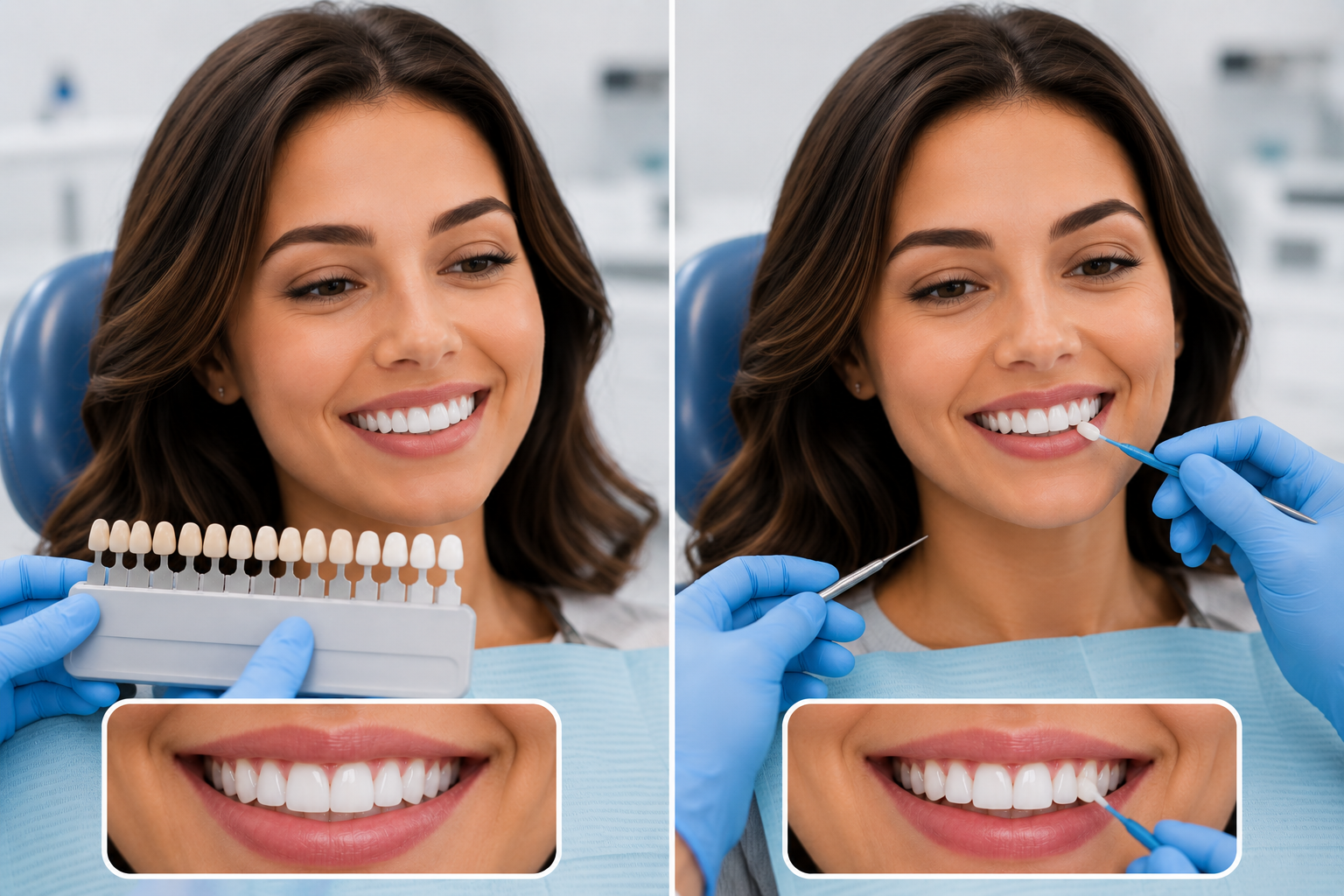
When it comes to addressing chips, gaps, discoloration, or minor shape issues with your teeth, two of the most common cosmetic options are porcelain veneers and dental bonding. Both can produce noticeable improvements, but they differ significantly in terms of process, durability, and cost — making it worth understanding how each one works before deciding which is right for you.
What Is Dental Bonding?
Dental bonding uses a tooth-colored composite resin, which is applied directly to the tooth, shaped, and hardened with a curing light. Because it’s applied and sculpted in a single visit, bonding is often the quicker and more affordable of the two options. It’s commonly used for small chips, minor gaps, slight reshaping, or covering small areas of discoloration.
What Are Porcelain Veneers?
Porcelain veneers are thin, custom-made shells designed to cover the front surface of a tooth. Unlike bonding, veneers are crafted in a dental lab based on impressions or digital scans of your teeth, then bonded into place during a follow-up visit. Porcelain is known for closely mimicking the translucency of natural enamel, which contributes to a very natural-looking result.
Comparing the Two: Key Differences
Durability. Porcelain veneers are generally more durable and resistant to staining than composite bonding, which can wear and discolor more noticeably over time and may need touch-ups or replacement sooner.
Process and timeline. Bonding can often be completed in a single visit, while veneers typically require at least two visits — one for preparation and impressions, and another for placement of the final veneer.
Reversibility. Bonding is minimally invasive and can sometimes be adjusted or removed without significant impact on the tooth. Veneers require removing a small amount of enamel, making the process less reversible.
Cost. Bonding is generally more affordable than veneers, reflecting the difference in materials, lab work, and longevity.
Best use cases. Bonding is often well-suited for small, localized fixes, while veneers tend to be a better fit for more extensive cosmetic changes or when long-term durability is a priority.
How to Decide Between Them
The right choice often comes down to the extent of the cosmetic concern, your budget, and how long you’d like the results to last. For minor issues — a small chip or slight gap — bonding may be all that’s needed. For more comprehensive smile changes, or when you want a longer-lasting result, veneers may be worth the additional investment.
Conclusion
Both dental bonding and porcelain veneers can deliver meaningful cosmetic improvements, but they serve somewhat different purposes. A conversation with your dentist about your specific concerns, goals, and budget is the best way to determine which option — or combination of options — makes the most sense for your smile.
Frequently Asked Questions
How long does dental bonding last?
Bonding typically lasts several years, though it can be more prone to staining and chipping over time compared to porcelain, and may need touch-ups periodically.
Is getting veneers painful?
The process involves removing a small amount of enamel and is typically done with local anesthesia, with most patients experiencing only mild sensitivity afterward.
Can bonding be used to fix a chipped tooth?
Yes — bonding is commonly used for small chips, and the composite resin can be shaped and polished to match the surrounding tooth closely.
Which option looks more natural — bonding or veneers?
Both can look very natural when done well, though porcelain veneers are often considered to have a slight edge in mimicking the translucency of natural enamel, especially for larger areas.
Can I switch from bonding to veneers later if I want?
In many cases, yes — though your dentist can advise on the best approach based on the condition of the tooth and any existing bonding.
Explore Your Options at Love Dentistry
Whether you’re considering a quick fix with bonding or a more comprehensive change with veneers, Dr. William Fong and our team can help you understand which option fits your goals.
Call (360) 623-7318 or request an appointment with our Bellingham, WA cosmetic dentistry team.