



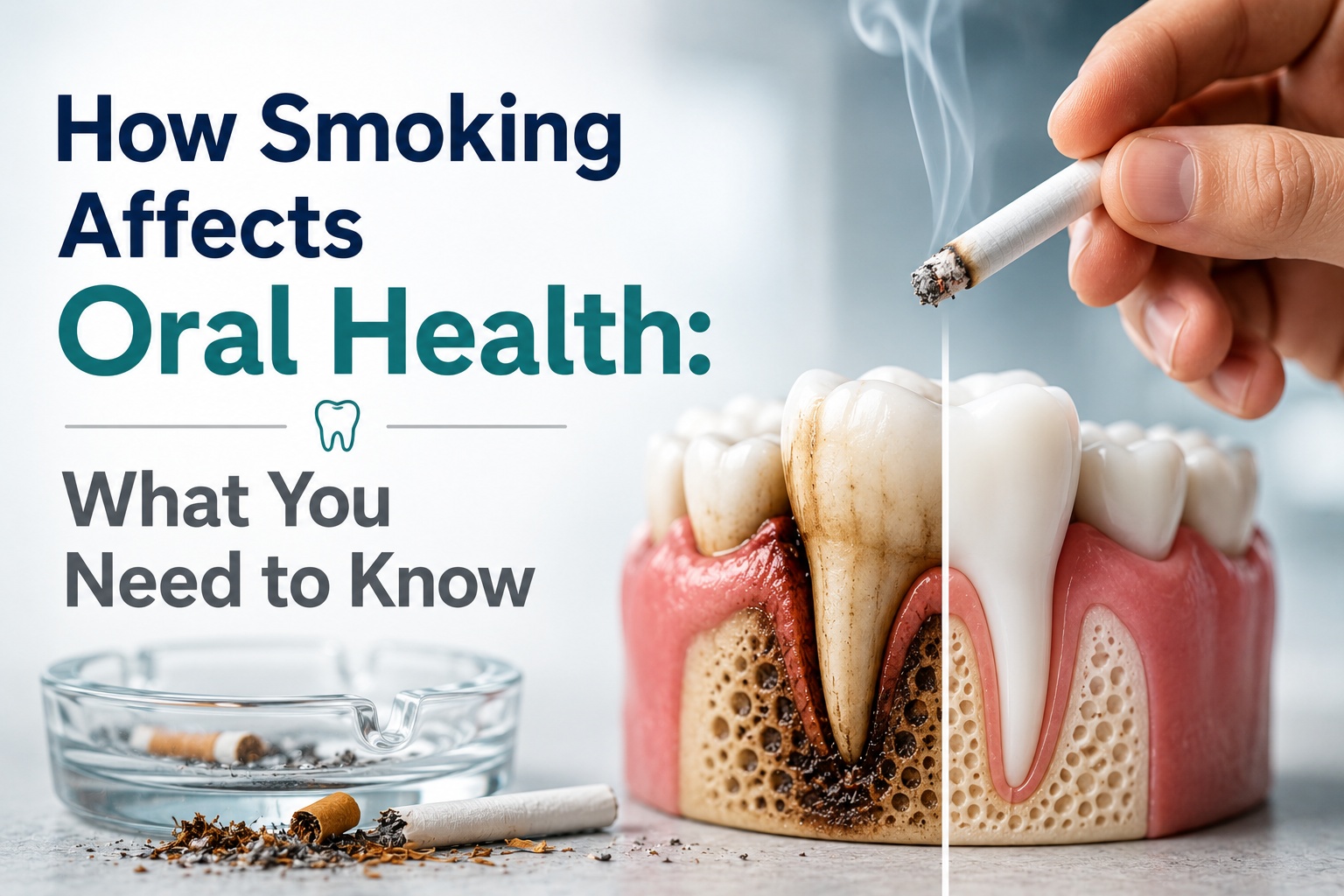
Smoking impacts far more than your lungs—it has serious consequences for your mouth, teeth, and gums. Understanding how smoking affects oral health can help you make informed decisions and protect your smile. At Love Dentistry in Bellingham, WA, we work with patients to prevent and treat the damage caused by tobacco use.
How Smoking Affects Oral Health
The effects of smoking on the mouth begin almost immediately. Tobacco introduces harmful chemicals that weaken the body’s natural defenses, making it harder to fight infections and maintain healthy tissues.
One of the most noticeable ways smoking affects oral health is through staining. Nicotine and tar can quickly discolor teeth, leading to yellow or brown stains that are difficult to remove with regular brushing.
Beyond cosmetic issues, smoking significantly reduces blood flow to the gums. This limits oxygen and nutrients, slowing healing and increasing the risk of gum disease.
Increased Risk of Gum Disease
Gum disease is one of the most serious ways smoking affects oral health. Smokers are more likely to develop gingivitis and periodontitis, which can lead to gum recession, bone loss, and even tooth loss.
Because smoking weakens the immune system, it becomes harder for the body to fight off the bacteria that cause infections. This allows gum disease to progress more quickly and with fewer obvious symptoms, making it harder to detect early.
Delayed Healing and Complications
Another critical factor in how smoking affects oral health is delayed healing. After dental procedures such as extractions, implants, or gum treatments, smokers often experience slower recovery times.
This delay increases the risk of complications, including infections and implant failure. Even minor dental work can take longer to heal properly when tobacco use is involved.
Bad Breath and Dry Mouth
Persistent bad breath, also known as halitosis, is a common issue for smokers. Tobacco smoke leaves behind particles that linger in the mouth, contributing to an unpleasant odor.
Smoking also reduces saliva production, leading to dry mouth. Saliva is essential for washing away bacteria and neutralizing acids, so reduced saliva increases the risk of cavities and infections.
Higher Risk of Oral Cancer
One of the most serious ways smoking affects oral health is the increased risk of oral cancer. Tobacco use is a leading cause of cancers affecting the lips, tongue, cheeks, and throat.
Early detection is critical, which is why regular dental visits are essential for smokers. Dentists can identify unusual changes or lesions that may require further evaluation.
Impact on Overall Oral Hygiene
Smoking makes it more difficult to maintain good oral hygiene. Plaque and tartar buildup tend to accumulate more quickly, increasing the likelihood of tooth decay and gum problems.
Additionally, the reduced ability to heal and fight infection means that even small issues can escalate into more serious conditions if left untreated.
Steps to Protect Your Oral Health
While quitting smoking is the most effective way to improve oral health, there are additional steps you can take to reduce damage:
- Maintain consistent brushing and flossing habits
- Schedule regular dental checkups and cleanings
- Stay hydrated to combat dry mouth
- Use dentist-recommended products for gum health
Taking these steps can help minimize the negative effects while you work toward quitting.
Why Choose Love Dentistry in Bellingham, WA
At Love Dentistry, we understand the challenges associated with smoking and oral health. Our team provides compassionate, judgment-free care tailored to each patient’s needs.
We focus on prevention, early detection, and personalized treatment plans to help you maintain a healthier smile. Whether you’re managing the effects of smoking or working toward quitting, we’re here to support you every step of the way.
Conclusion
Understanding how smoking affects oral health is essential for protecting your smile and overall well-being. From gum disease to oral cancer, the risks are significant—but with the right care and support, you can take control of your oral health.
If you’re concerned about how smoking affects oral health, schedule an appointment with Love Dentistry in Bellingham, WA today. Our team is here to help you achieve a healthier, brighter smile.
Frequently Asked Questions
Can smoking cause tooth loss?
Yes, smoking increases the risk of gum disease, which is a leading cause of tooth loss.
Does quitting smoking improve oral health?
Absolutely. Quitting allows your gums to heal and reduces the risk of serious dental issues.
Why do smokers have bad breath?
Tobacco particles and dry mouth contribute to persistent bad breath.
How often should smokers visit the dentist?
Smokers should visit the dentist at least every six months, or more frequently if recommended.
Is vaping safer for oral health than smoking?
While often perceived as safer, vaping can still harm oral tissues and should not be considered risk-free.