



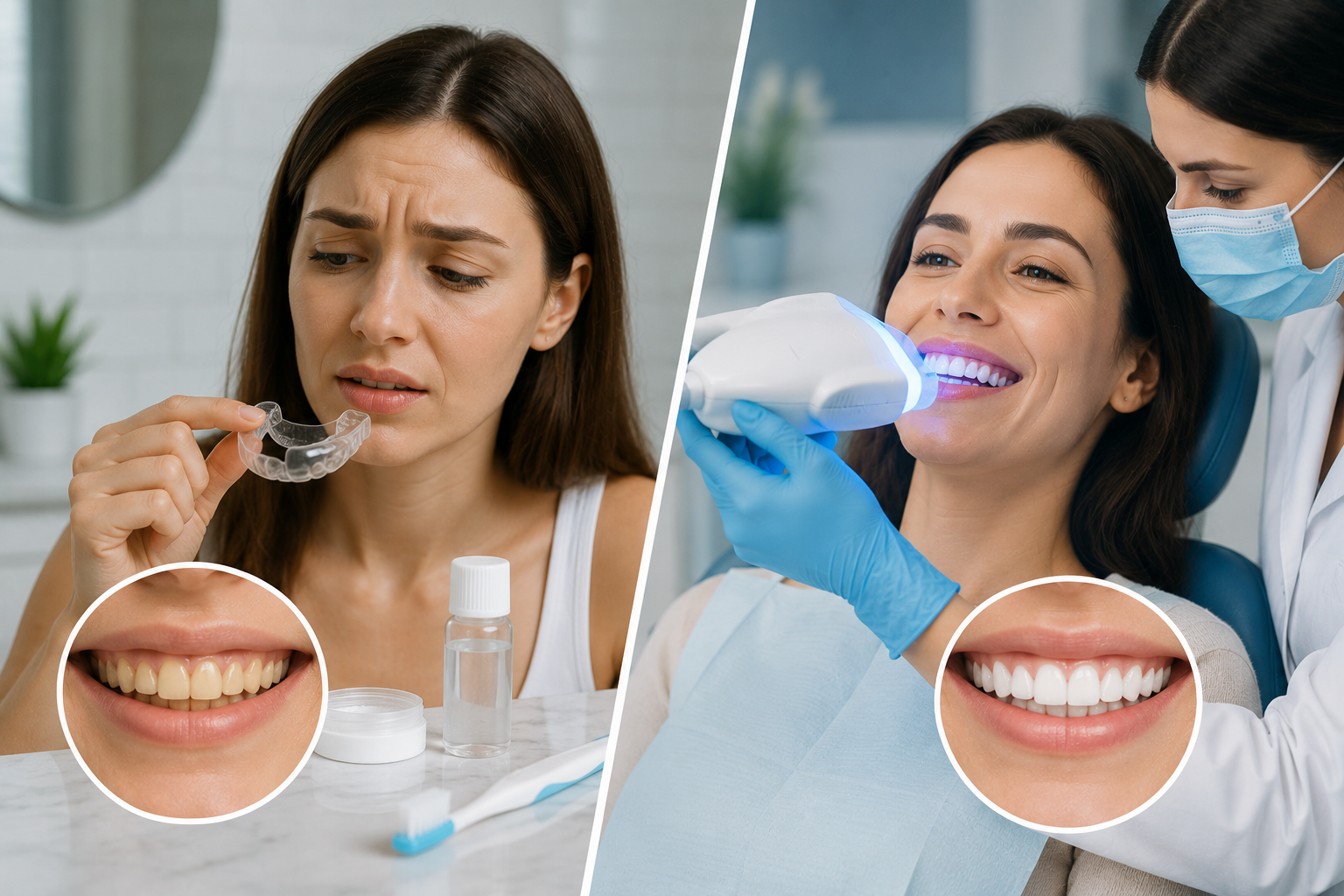
A bright, white smile is a confidence booster, and many people seek ways to remove stains and achieve a radiant look. Discoloration can occur from a variety of factors, including coffee, tea, red wine, smoking, or simply the natural aging process. If you’re considering whitening your teeth, you’ve likely come across both DIY methods and professional treatments, each claiming to provide fast and noticeable results.
Understanding the differences between DIY and professional teeth whitening can help you make an informed decision that balances safety, effectiveness, and long-term results. It’s important to consider not only the desired shade but also the health of your teeth and gums, as some whitening methods may increase sensitivity or irritation if not used properly.
By learning about the different approaches, patients can set realistic expectations and make choices that protect their oral health while delivering the smile they desire.
Understanding DIY Teeth Whitening
DIY teeth whitening refers to over-the-counter products and home remedies designed to lighten teeth. These include whitening strips, gels, toothpaste, and even natural solutions like baking soda or activated charcoal.
The advantages of DIY whitening are convenience and lower cost. Many products are easy to use at home and don’t require a dental visit. They can be effective for minor surface stains caused by coffee, tea, or smoking.
However, DIY methods come with limitations. Over-the-counter products typically have lower concentrations of whitening agents, which means results may take longer and may be less dramatic. Additionally, incorrect use of these products can lead to tooth sensitivity, gum irritation, or uneven whitening. Natural remedies, while popular, are not always backed by scientific evidence and may even damage enamel if used excessively.
Professional Teeth Whitening
Professional whitening is performed under the supervision of a dentist and involves stronger bleaching agents than over-the-counter products. Treatments can be done in-office or with dentist-provided custom trays for at-home use.
The benefits of professional whitening include faster, more predictable results and reduced risk of complications. Dentists can tailor the treatment to your teeth, ensuring even whitening and protecting sensitive areas and gums. Professional treatments are particularly effective for deep stains caused by medications, aging, or intrinsic discoloration that DIY methods may not address.
Additionally, dentists can monitor your oral health before, during, and after the whitening process. This ensures that any underlying issues, such as sensitivity, cavities or gum disease, are addressed prior to treatment, which improves safety and long-term results.
Comparing DIY vs. Professional Teeth Whitening
When deciding between DIY vs. professional teeth whitening, consider several key factors:
- Effectiveness: Professional treatments provide more noticeable and longer-lasting results. DIY options work best for minor stains but may require repeated use.
- Safety: Supervised whitening reduces the risk of over-bleaching and gum irritation. DIY products can cause sensitivity if used improperly.
- Cost: DIY options are generally less expensive upfront, but repeated treatments may add up over time. Professional whitening is costlier but often more efficient.
- Convenience: DIY treatments are easy to use at home, while professional treatments may require appointments or custom trays.
Ultimately, the choice depends on your oral health, the type of stains you have, and your desired results. Consulting a dentist is the safest way to determine which approach is right for you.
Tips for Safe Teeth Whitening
Regardless of the method you choose, follow these tips to protect your teeth and gums:
- Avoid excessive use of whitening products. Follow the recommended duration and frequency.
- Maintain good oral hygiene by brushing, flossing, and using mouthwash.
- Limit staining foods and beverages like coffee, tea, red wine, and dark sauces.
- Consider professional advice before trying high-concentration whitening gels at home.
Conclusion
Both DIY and professional teeth whitening have their advantages, but understanding the differences can help you achieve a brighter smile safely and effectively. DIY methods are convenient and affordable for minor stains, but professional whitening offers faster, more predictable results with lower risk of complications.
At Love Dentistry in Bellingham, WA, we help patients weigh the benefits of DIY vs. professional teeth whitening and recommend the most suitable approach based on individual oral health and cosmetic goals. A well-informed decision ensures not only a radiant smile but also long-term dental health.
Frequently Asked Questions
1. Can DIY teeth whitening damage my teeth?
Yes, overuse or incorrect application of whitening products can cause enamel erosion, gum irritation, and increased tooth sensitivity.
2. How long do professional whitening results last?
Professional whitening typically lasts longer than DIY treatments, often up to 1–2 years, depending on lifestyle and oral hygiene habits.
3. Are professional whitening treatments safe for sensitive teeth?
Yes. Dentists can use techniques and products that minimize sensitivity while still achieving effective results.
4. Can I combine DIY and professional treatments?
It’s best to consult your dentist before combining treatments. Improper combination may increase sensitivity or damage enamel.
5. How often should I whiten my teeth?
Frequency depends on the method and your dental health. Professional advice ensures safe timing between treatments to maintain results without harming enamel.